History of Encampment
An exploration of the ceremonial traditions, military heritage, and symbolic significance of the Encampment degrees within the Independent Order of Odd Fellows.
Discover the founding and evolution of the Encampment system, its unique ceremonial structure, distinctive regalia, charitable contributions, and the profound impact these specialized degrees have had on the broader Odd Fellows organization and its members worldwide.
Start Learning
History of the Encampment Degrees
The Encampment system represents one of the most elaborate and ceremonially significant developments within the Independent Order of Odd Fellows, combining military tradition with fraternal ideals.
Origins and Development of the Encampment System
The Encampment system emerged in the mid-19th century as a natural evolution of the Odd Fellows fraternity's desire to create more advanced and specialized degrees of membership. Building upon the foundational three degrees of Odd Fellowship—Initiatory, Fellowcraft, and Mastership—Odd Fellows leaders recognized the potential for developing higher degrees that would deepen members' understanding of fraternal principles while introducing new ceremonial and organizational structures.
What distinguished the Encampment system from other Odd Fellows degree structures was its explicit incorporation of military imagery, pageantry, and organizational principles. The term "Encampment" itself evokes the gathered armies and military camps of history, reflecting a deliberate choice to infuse Odd Fellowship with the ceremonial grandeur and structured hierarchy associated with military tradition. This was not intended to make Odd Fellows a military organization, but rather to enhance the fraternal experience through elaborate ceremonial work that members found deeply meaningful and spiritually enriching.
The establishment of formal Encampment degrees represented a significant expansion of Odd Fellowship's reach. By offering members pathways to advancement beyond the basic three degrees, the organization provided opportunities for deeper engagement, leadership development, and spiritual exploration. Encampments became centers of fraternal activity, known for their spectacular ceremonial presentations, impressive regalia, and unwavering commitment to Odd Fellowship's core principles of Friendship, Love, and Truth translated into advanced spiritual and social contexts.
Early Encampment Development
The earliest formal Encampment work began to emerge as ambitious Odd Fellows leaders sought to create additional degrees that would appeal to experienced members seeking continued advancement. These early efforts were experimental and varied widely by location and lodge.
Standardized Degrees
As the Odd Fellows organization matured, there was increasing recognition of the need to standardize Encampment degrees across different lodges and jurisdictions. Efforts began to create consistent ceremonial work and degree structures.
Peak Development and Expansion
The late 19th century witnessed explosive growth in Encampment participation. Elaborate ceremonial presentations, distinctive military-style regalia, and competitive marching became hallmarks of Encampment culture during this period.
Adaptation to Modern Era
As society modernized, Encampments adapted their practices while maintaining traditional ceremonial elements. The organization became increasingly involved in charitable initiatives aligned with Odd Fellowship's broader mission.
Contemporary Development
Throughout the 20th century, Encampments maintained their significance within Odd Fellowship while navigating changing social conditions. They remained centers of fraternal activity and charitable work.
Continuity and Evolution
Today, Encampments continue to thrive as active expressions of Odd Fellowship principles, combining historical tradition with contemporary charitable missions and community service.
Structure and Organization
The Encampment system features a distinctive organizational structure that reflects both military tradition and fraternal governance principles.
Encampment Leadership
Encampments are led by three principal elected officers who carry distinctive titles reflecting their military-inspired heritage and fraternal responsibilities. The Chief Patriarch (C.P.) presides as the primary leader, the Senior Warden (S.W.) serves as second-in-command, and the Junior Warden (J.W.) ranks third in the hierarchy. These officers guide the Encampment's ceremonial work, charitable initiatives, and general operations with hierarchical structure that provides clear lines of responsibility while maintaining democratic principles through regular elections.
Each principal officer carries distinct responsibilities essential to the Encampment's proper functioning. The Chief Patriarch presides over all meetings and confers degrees, while the Senior Warden assists in all duties and oversees order and discipline. The Junior Warden supports both senior officers and often supervises committees and candidate preparation.
Leadership positions within Encampments are typically reserved for members who have demonstrated dedication to Odd Fellowship principles and possess the skills necessary to preserve ceremonial integrity while advancing the organization's mission. Learn more about the principal officers.
Ceremonial Degrees
The Encampment system comprises multiple ceremonial degrees, each with distinct themes, symbolism, and teachings. Members progress through these degrees, each adding layers of understanding to Odd Fellowship's core principles and historical traditions. The ceremonial work emphasizes both individual spiritual development and collective fraternal bonds.
Encampment degrees feature elaborate ceremonial presentations with appropriate regalia, stage management, and symbolic ritual elements designed to convey profound spiritual and philosophical truths in memorable and transformative ways.
Governing Principles
Encampments operate under the broader governance framework of the Independent Order of Odd Fellows while maintaining their own bylaws and regulations. They answer to their Grand Encampment or equivalent regional governing body, which ensures consistency in ceremonial work and alignment with Odd Fellowship's international standards.
Democratic participation is fundamental to Encampment governance. Members have the right to vote on major issues, elect officers, and contribute to the organization's direction. This commitment to democratic principles reflects Odd Fellowship's foundational belief in the value of every member's voice and participation.
Regular meetings, annual gatherings, and periodic conferences provide forums for discussing matters of importance, sharing best practices, and strengthening the bonds that unite Encampments across different regions and jurisdictions.
Principal Encampment Officers
The leadership of each Encampment rests with three principal officers who guide the organization's ceremonial work, charitable initiatives, and overall operations.
Chief Patriarch
C.P.
The Chief Patriarch serves as the leader of the Encampment, presiding over all meetings and directing the conferral of degrees. He carries a distinctive ceremonial hook as the symbol of his office and authority.
- • Presides over meetings and ceremonial work with the hook of office
- • Confers degrees upon candidates
- • Represents authority, wisdom, and spiritual leadership
- • Equivalent to a "President" or "Master" role
Senior Warden
S.W.
The Senior Warden serves as the second-in-command, assisting the Chief Patriarch in all duties and responsibilities.
- • Second-in-command to the Chief Patriarch
- • Assists in all ceremonial and organizational duties
- • Oversees order and discipline
- • Represents strength and support
Junior Warden
J.W.
The Junior Warden ranks third in the organizational hierarchy, supporting both the Chief Patriarch and Senior Warden.
- • Third-ranking officer in the Encampment
- • Supports both C.P. and S.W. in their duties
- • Often supervises committees and candidate preparation
- • Represents vigilance and readiness
Encampment Degrees
Encampment degrees represent advanced stages of fraternal development within the Odd Fellows organization, each offering unique ceremonial experiences and deeper layers of spiritual and philosophical understanding.
Structure and Progression of Degrees
The Encampment degree system provides a comprehensive pathway for members seeking advanced fraternal development. Members typically advance through multiple degrees in a structured progression, with each degree building upon the knowledge and experiences of previous levels. This hierarchical advancement system ensures that members develop progressively deeper understandings of Odd Fellowship's teachings and traditions.
The Encampment system features three primary degrees, each with distinct teachings and symbolic significance. All Encampment degrees share common themes of spiritual development, military tradition, charitable service, and fraternal brotherhood. Members may spend considerable time within each degree level, ensuring they fully assimilate the teachings before advancing to higher degrees.
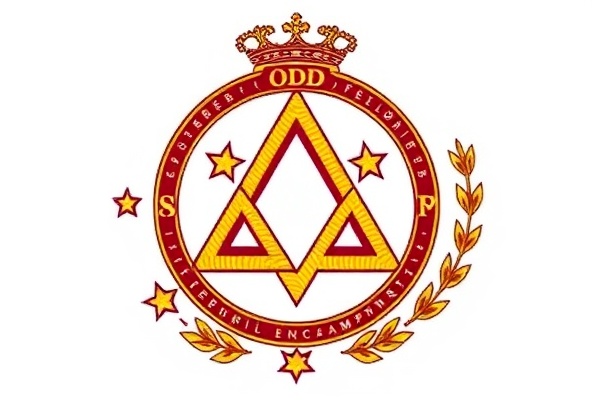
The Three Degrees of Encampment

Patriarchal Degree
The Patriarchal Degree focuses on the foundational virtues that build strong character and families. Members explore the lessons of honesty, which forms the basis of all trust and integrity; domestic purity, emphasizing the sanctity of family and home; genuine hospitality, expressing care and welcome toward all; and righteousness, aligning one's actions with moral and ethical principles. This degree establishes the fundamental values upon which all subsequent advancement is built.
The Patriarchal Degree ceremony is designed to impress upon candidates the weight and significance of personal integrity. Through elaborate ritual presentations, candidates are taught that character is not something inherent but rather something developed through deliberate cultivation of virtue and consistent alignment of actions with ethical principles. The degree emphasizes that a person's reputation and relationships are built through countless small acts of honesty and integrity.
Symbolically, the Patriarchal Degree represents the establishment of a firm foundation upon which everything else is built. Just as a sturdy patriarchal figure guides and protects a household, members are taught to become protectors and exemplars of virtue within their own families and communities. The degree teaches that personal discipline and moral consistency create the conditions for genuine respect and authority.
Members who achieve the Patriarchal Degree often serve as mentors to newer candidates, demonstrating through their own conduct the practical application of the virtues taught. Many Encampments recognize that the Patriarchal Degree creates a cadre of experienced members capable of guiding organizational activities and representing the fraternity's highest ideals in community engagement.

Golden Rule Degree
The Golden Rule Degree emphasizes the relational virtues that connect individuals to their broader community. Members contemplate the lessons of good will, fostering positive intentions and genuine care for others' wellbeing; tolerance, accepting diverse perspectives and respecting differences; and true brotherhood, building bonds that transcend ordinary social distinctions. This degree deepens members' understanding of interdependence and mutual obligation.
Building upon the personal virtues established in the Patriarchal Degree, the Golden Rule Degree extends ethical principles outward into the community. Members learn that individual virtue is incomplete without compassionate engagement with others. The ceremony teaches that genuine strength comes not from isolation or superiority, but from the ability to recognize shared humanity and common purpose across lines of difference and division.
The Golden Rule Degree emphasizes practical application of universal brotherhood principles. Members are taught that tolerance does not mean weak indifference or passive acceptance of all viewpoints, but rather active respect for others' dignity and worth combined with willingness to learn from different perspectives. Good will is presented not as sentiment but as a foundation for constructive relationships and collaborative problem-solving within diverse communities.
Symbolically, the Golden Rule represents the expansion of the moral circle from family and immediate associates to encompass all humanity. The degree teaches that the virtues established in the Patriarchal Degree must be balanced with generosity, openness, and genuine brotherhood toward all people regardless of background, status, or beliefs. Members learn that Odd Fellowship's vision of universal brotherhood begins with individual commitments to practice these relational virtues.
Members who achieve the Golden Rule Degree become ambassadors of these principles within their Encampments and broader communities. Many serve in roles coordinating charitable activities, facilitating intergroup dialogue, or mentoring newer candidates in the practical application of tolerance and good will. The degree cultivates leaders capable of building bridges across community divisions and working toward common good despite differences of perspective or background.
Royal Purple Degree
The Royal Purple Degree represents the culmination of a member's ascent through Encampment advancement, standing as the highest ceremonial degree available to Odd Fellows members seeking continued development and leadership preparation. This degree focuses on cultivating the personal qualities necessary for exceptional achievement, meaningful influence, and steadfast dedication to fraternal principles in the face of life's challenges. Members who study this degree contemplate the lessons of alertness—maintaining keen awareness and responsiveness to life's opportunities, challenges, and responsibilities—and determination, developing the resolve, perseverance, and unwavering commitment necessary to overcome obstacles and achieve worthwhile goals worthy of genuine respect and recognition.
The Royal Purple Degree ceremony is extraordinarily elaborate, typically requiring extended time and employing all the pageantry that Encampment traditions have developed over centuries. The ceremony powerfully dramatizes the transformation from ordinary person to exceptional leader through a series of carefully choreographed scenes and symbolic demonstrations. Candidates encounter trials and challenges designed to test their mental clarity, emotional resilience, and spiritual commitment. The ceremony emphasizes that true advancement comes not from birth or circumstance, but from deliberate cultivation of virtue, rigorous self-discipline, and unwavering dedication to higher principles. Through these demanding ceremonial presentations, candidates emerge with a profound appreciation for the journey they have undertaken and the responsibilities they are assuming.
Symbolically, the Royal Purple Degree draws its name and significance from the historical association of purple with royalty, majesty, and authority—but in the Encampment context, this represents not inherited power but earned achievement. The degree teaches that true nobility comes from character excellence rather than social station. Purple also symbolizes the synthesis and integration of all previous degree teachings: it combines the red of passion and courage with the blue of wisdom and truth, representing the unified development of all human faculties. Members who achieve the Royal Purple Degree are taught that they have attained a state of personal development where head, heart, and spirit work in harmonious concert.
The Royal Purple Degree carries profound implications for organizational leadership and fraternal responsibility. Members who achieve this degree are recognized as among the most committed and developed within the Encampment, and many subsequently assume positions of significant responsibility including officer roles, ceremonial conductor positions, and committee leadership. The degree is understood not as a destination marking the end of one's journey, but rather as certification of readiness for greater service and continued growth. Encampment leaders recognize Royal Purple members as resources for mentoring newer candidates, preserving ceremonial quality, and ensuring that the organization's highest ideals are maintained and advanced.
Members who have received the Royal Purple Degree frequently report that it represents a transformative experience—a moment when they fully grasp the significance of their fraternal commitment and the power of belonging to an organization dedicated to something greater than themselves. Many describe renewed appreciation for Odd Fellowship's mission and deepened commitment to living out its principles in their daily lives. The Royal Purple Degree simultaneously represents an individual achievement and initiation into a broader community of advanced members who understand themselves as custodians of Encampment tradition and agents of charitable service. This dual dimension—personal accomplishment combined with recognition of expanded fraternal responsibility—makes the Royal Purple Degree one of Odd Fellowship's most prized and meaningful ceremonial experiences.
Common Encampment Degree Elements
Ceremonial Work
Each degree features elaborate ceremonial presentations that typically last several hours. These ceremonies employ ritual actions, symbolic language, and meaningful symbolism to convey important truths about human nature, spiritual development, and fraternal relationships.
Symbolic Themes
Encampment degrees incorporate diverse symbolic themes including military leadership, spiritual enlightenment, charitable service, and personal transformation. These symbols are drawn from historical, spiritual, and cultural traditions relevant to each degree's particular teachings.
Leadership Development
Through degree work and participation in Encampment activities, members develop leadership skills and deeper understanding of organizational management. Many members who advance through higher degrees eventually take leadership positions within their Encampments.
Spiritual Growth
Each degree is designed to promote spiritual and personal growth, encouraging members to reflect on deeper life questions and develop stronger moral and ethical foundations aligned with Odd Fellowship's core principles of Faith, Hope, and Charity.
Historical Connection
Encampment degrees connect members to the long history of Odd Fellowship and fraternal tradition. Members gain appreciation for the organization's evolution, the struggles of past members, and the enduring values that have sustained the organization through centuries.
Community of Seekers
Members progressing through Encampment degrees become part of a community of seekers dedicated to personal improvement and service to others. This community provides support, encouragement, and meaningful fellowship throughout the degree advancement process.
Degree Advancement and Commitment
Advancing through Encampment degrees represents a significant commitment of time, energy, and resources. Members must demonstrate genuine dedication to Odd Fellowship's principles and willingness to actively participate in the organization's ceremonial and charitable work. Advancement is not automatic but rather reflects the member's readiness for deeper involvement and responsibility.
The degree advancement process creates a natural progression where members gradually take on greater responsibilities within the Encampment. Newer members might participate in degree conferral committees, while more advanced members typically hold leadership positions and guide the organization's overall direction.
Many Encampments maintain long-standing traditions regarding degree advancement, with specific times of year designated for degree conferrals and annual gatherings celebrating the achievements of members who have advanced through the degree system. These celebrations reinforce the importance of personal development and fraternal growth.
Core Principles and Teachings
Encampments embody and teach the timeless values that have guided Odd Fellowship from its inception, grounded in three foundational principles.
Faith
The Foundation of Fraternal Purpose
Faith represents the foundational confidence upon which all Encampment work rests. It is not blind faith, but rather informed faith grounded in centuries of fraternal tradition, accumulated wisdom, and the lived experiences of countless members who have dedicated themselves to Odd Fellowship's noble purposes. Faith in Encampment encompasses several dimensions: faith in the transformative power of fraternal fellowship, faith in the inherent dignity and potential of every human being, and faith in humanity's capacity for moral improvement and spiritual growth.
At its deepest level, Faith in Encampment represents trust in purposes that transcend individual self-interest. Members approach their fraternal work with confidence that their efforts—whether in ceremonial work, charitable service, or leadership—contribute to purposes larger than themselves. This faith sustains members through challenges and setbacks, providing spiritual resilience and moral courage when circumstances test their commitment.
Faith in Encampment also manifests as trust in one another. Members are taught to have faith in their brothers' integrity, character, and commitment to fraternal principles. This mutual faith creates bonds of genuine brotherhood that distinguish fraternal organizations from merely social gatherings. When members demonstrate consistent integrity and live according to fraternal principles, they strengthen the faith of others and deepen the organization's collective commitment.
Encampments cultivate faith through ceremonial work that connects members to historical tradition and spiritual truth. Degree work, ritual presentations, and symbolic teachings are designed to awaken and strengthen members' faith in the enduring values that guide Odd Fellowship. Many members report that their progression through Encampment degrees deepened their personal faith not only in fraternal purposes but in spiritual and moral dimensions of human existence itself.
Hope
The Motivating Vision of Better Tomorrow
Hope is the principle that animates Encampment action and sustains commitment through the long work of personal and social improvement. It is the conviction that things can be better—that individuals can develop into more virtuous persons, that communities can become more just and compassionate, and that humanity's future can be brighter than its past. This is not naive optimism but rather reasoned hope based on the actual capacity of people working together to effect meaningful change.
In Encampment context, Hope operates on multiple levels. At the personal level, it motivates individual members toward self-improvement and moral development. Members approach their fraternal work with hope that their personal transformation will make them better husbands, fathers, community members, and citizens. At the organizational level, Hope motivates Encampments toward ambitious charitable and community service initiatives. Hope drives fundraising for hospitals and educational institutions, participation in disaster relief, and sustained commitment to serving the vulnerable.
Hope is particularly important in sustaining Encampment work because charitable service and personal development are long-term endeavors. Without hope that genuine change is possible, members might become discouraged by the magnitude of suffering in the world or overwhelmed by the difficulty of personal transformation. Hope sustains effort even when results appear slow or incomplete, recognizing that small acts of kindness, education, and service accumulate into significant impact across generations.
Encampment tradition teaches that hope is not passive waiting but active engagement with the future. Members are encouraged to work as if the better world they envision is not merely possible but inevitable—that their efforts contribute to a trajectory of progress and improvement. This active hope has motivated Encampments throughout history to establish hospitals, endow scholarships, support youth development, and pioneer charitable innovations that have benefited countless individuals and communities.
Charity
The Active Expression of Universal Love
Charity is perhaps the most visible and tangible of the three principles, yet it encompasses far more than simple financial giving or occasional volunteer service. In Encampment teaching, Charity represents the active, comprehensive expression of love and compassion toward all humanity. It is rooted in the conviction that every person has inherent worth and dignity, and that those with resources and capacity have a moral obligation to serve those in need.
The Encampment understanding of Charity extends beyond charity as philanthropy to encompass charity as a way of being and relating to others. True Charity includes: practical assistance to those in immediate need (food, shelter, medical care); investment in long-term solutions to suffering (educational programs, career development, mental health support); advocacy for justice and systemic improvement; compassionate presence with those who are suffering; and respect for the dignity of recipients of charitable assistance. Encampments reject condescension or patronization, understanding that charitable service is a mutual exchange where givers and receivers are bound in common humanity.
Throughout Encampment degree work, members are taught that Charity flows from understanding one's fundamental interdependence with all humanity. The charitable impulse arises not from abstract principles but from recognition that the suffering of others is ultimately our suffering, and the flourishing of others is our flourishing. This understanding transforms charity from obligation into genuine expression of fraternal love and recognition of shared destiny.
Encampment commitment to Charity is not limited to sympathetic individuals; it is institutionalized in the organization's structure and traditions. Encampments as organizations maintain charitable committees, allocate significant portions of their resources to charitable initiatives, and expect members to participate actively in charitable service. Many Encampments have established endowments, foundations, and formal charitable programs that ensure sustained commitment to specific causes across generations.
The combination of Faith and Hope sustains the Charity of Encampments. Faith provides the moral conviction that charitable service is a sacred duty and expression of fraternal brotherhood. Hope provides the optimism that such service genuinely improves lives and contributes to a better world. Together, these principles have motivated Encampments to build institutions and fund initiatives that have touched millions of lives across centuries, demonstrating that serious commitment to charitable action can transform both individual lives and entire communities.
Charitable Commitment
A defining characteristic of Encampments is their unwavering commitment to charitable service. Encampment members organize and participate in numerous charitable initiatives, fundraising events, and community service projects designed to alleviate suffering and improve lives. This commitment to active charity distinguishes Encampments as not merely philosophical societies, but organizations dedicated to tangible good works.
Whether supporting hospitals, funding scholarships, assisting families in distress, or providing community services, Encampments consistently demonstrate that their ceremonial traditions and fraternal bonds translate directly into meaningful charitable action that benefits their communities and the world.
Distinctive Regalia and Symbolism
Encampment members are recognized for their distinctive and impressive regalia, which carries deep symbolic meaning rooted in centuries of fraternal tradition and ceremonial excellence.

Military-Inspired Uniforms
Encampment regalia features military-style uniforms with distinctive insignia, decorations, and ceremonial items. These uniforms are typically elaborately decorated and often feature military medals, bands, ribbons, and other regalia that signify rank, accomplishment, degree advancement, and organizational affiliation. The quality of these uniforms reflects the dignity and formality of Encampment ceremonies.
Members typically invest significant resources in acquiring and maintaining high-quality regalia, understanding that their appearance communicates respect for the organization and commitment to its principles. The uniformity across members creates a powerful visual statement of brotherhood and shared purpose.
The military aesthetic serves multiple purposes: it connects Encampments to historical tradition, provides visual pageantry that enhances ceremonial presentations, and creates a sense of unity and shared identity among members who wear these distinctive uniforms.
Symbolic Elements and Meanings
Encampment symbolism draws from multiple sources: military tradition, Odd Fellowship heritage, and universal spiritual truths. Each element carries specific meaning—from sword and shield to crown and star—communicating aspects of the Encampment's teachings and the advancement of its members through degree levels.
The Crown represents sovereignty and wisdom, the Star symbolizes divine guidance and enlightenment, the Sword stands for strength and protection of truth, the Shield signifies defense of principles, and the Heart embodies charity and compassion. These archetypal symbols connect members to universal human understandings of virtue and nobility.
These symbols serve as visual representations of the virtues and principles that Encampment members aspire to embody, reminding wearers and observers alike of the higher purposes that animate the organization.

The Ceremonial Sword
The ceremonial sword stands as one of the most important and recognizable symbols in Encampment tradition. Often ornately decorated with jeweled hilts, engraved blades, and precious metals, the sword represents truth, protection, and the willingness to defend noble principles.
Swords are used in many Encampment ceremonies, particularly in degree work where they symbolize the candidate's commitment to upholding Odd Fellowship's values and defending the vulnerable. Each sword is typically maintained as a valued piece of the lodge's collection, often becoming a historical artifact of significant importance.
The Chief Patriarch's Ceremonial Hook
The Chief Patriarch carries a distinctive ceremonial hook as the primary symbol of his office and authority. Unlike traditional gavels used in many organizations, the hook represents the Chief Patriarch's responsibility to guide, direct, and keep the Encampment true to its principles. The hook is ornately crafted and highly decorated, often featuring precious metals and intricate detailing.
The hook is prominently displayed during all official ceremonies and is used to direct the flow of ritual work, signal transitions between ceremonial segments, and symbolize the Chief Patriarch's guiding hand in Encampment affairs. The specific design and ornamentation of the Chief Patriarch's hook often reflects the individual lodge's aesthetic traditions and may become a treasured historical artifact passed down through successive leaders of the Encampment.
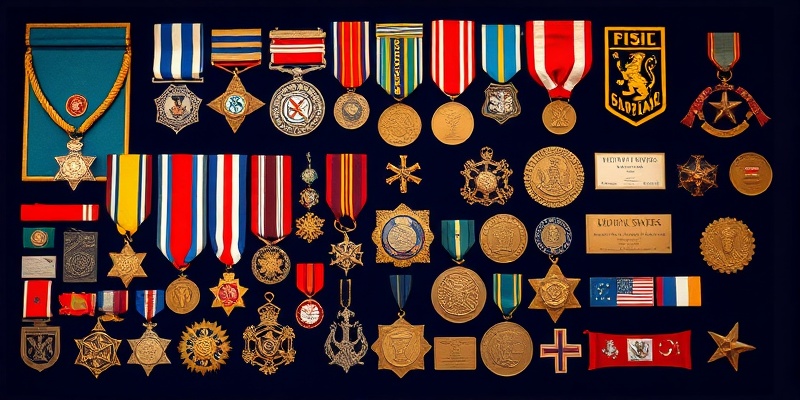
Medals and Insignia
Encampment members display medals, badges, and insignia that mark their advancement through degree levels, their length of service, and special accomplishments within the organization. These visible marks of honor serve as motivation for continued excellence and commitment.
Each medal carries specific significance, representing particular virtues or achievements. The display of medals on regalia communicates a member's journey within the fraternity and their dedication to Encampment principles and work.
Ceremonial Staffs and Banners
Ceremonial staffs and banners hold prominent positions in Encampment ritual and tradition. Staffs, often topped with crowns, stars, or other symbolic elements, are carried by officers during formal processions and ceremonies. Each staff represents the authority and responsibility of the office it symbolizes.
Banners feature heraldic symbols, fraternal emblems, and organizational insignia. These textile treasures are often hand-embroidered with meticulous detail and displayed during major ceremonial occasions. Many Encampment banners are historical artifacts, some dating back generations, and are cared for with great reverence.
The visual presence of these regalia items during ceremonies creates an atmosphere of solemnity, tradition, and connection to the broader fraternal community. Members understand that they are part of a lineage stretching back centuries.
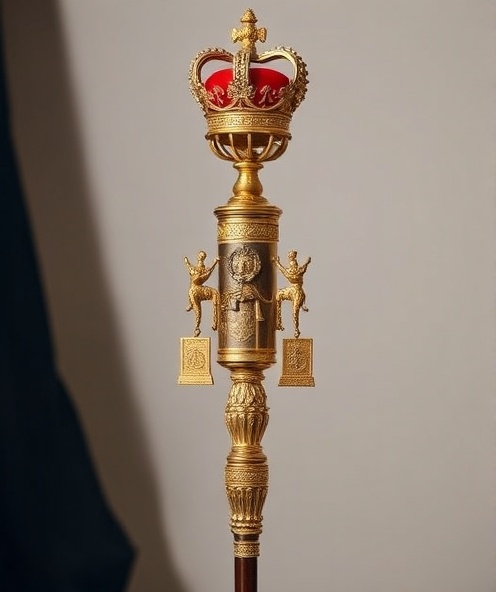
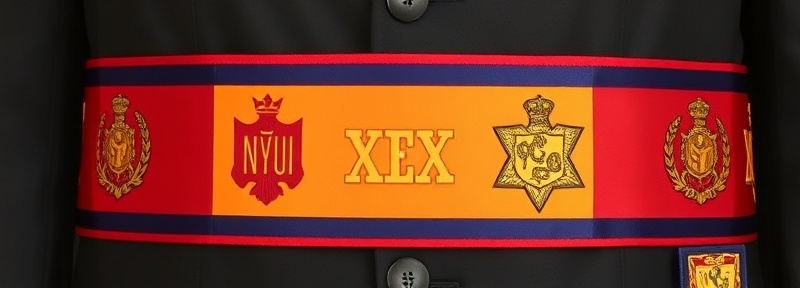
The Ceremonial Sash
The sash represents one of the most visible elements of Encampment regalia, worn prominently across the body during formal ceremonies. These sashes are typically crafted from fine materials and decorated with embroidered symbols representing the wearer's rank, degree level, and organization affiliation.
Colors and patterns vary by degree and position, allowing observers to immediately recognize the status and role of each member within the ceremonial hierarchy. The quality and appearance of the sash demonstrates the member's respect for the organization and commitment to maintaining traditions.
Many members wear sashes passed down from previous Encampment leaders, connecting them directly to the organization's history and heritage.
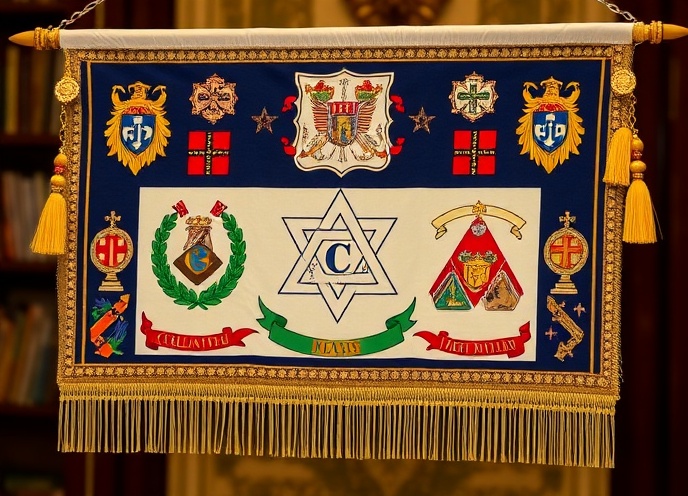
Heraldic Banners and Procession
Encampment banners featuring heraldic imagery and fraternal symbols are central to formal processions and ceremonial occasions. These banners often incorporate the organization's colors, emblems, and historical insignia, serving as visual anchors for the ceremonies being performed.
The presentation of banners in ceremonial procession creates a powerful visual narrative of the organization's heritage and values. Members take pride in the craftsmanship and historical significance of these textile treasures.
Regalia as Sacred Trust
Encampment regalia represents far more than mere decoration or costume. Each piece embodies the organization's history, values, and spiritual commitments. Members understand themselves as temporary custodians of these sacred items, responsible for maintaining them in excellent condition for future generations.
The creation, maintenance, and presentation of regalia and ceremonial items represent important aspects of Encampment culture. Specialized committees often oversee regalia quality, ensuring that uniforms meet high standards and that ceremonial items are properly maintained and displayed with appropriate reverence.
Members take pride in the quality and appearance of their regalia, understanding that outward presentation reflects inner dedication to the principles they represent and honors the brotherhood they belong to.

The Language of Symbols
Encampment symbols communicate a sophisticated language of meaning that members learn throughout their advancement. The Crown speaks of wisdom and leadership, the Star of divine guidance and spiritual illumination, the Torch of enlightenment and truth-bearing, the Heart of compassion and universal love, the Shield of protection and strength, and the Sword of justice and the defense of what is right.
When these symbols appear together on regalia, in ceremonies, or on organizational emblems, they create a coherent statement about Encampment's values and purposes. New members gradually learn to read this symbolic language, developing deeper appreciation for how the organization expresses its principles through visual forms.
The study of Encampment symbolism continues throughout a member's career, with different symbols becoming more meaningful as the member's own understanding deepens and their involvement in organizational leadership expands. This ongoing hermeneutical engagement with symbols keeps the fraternal message alive and vibrant.
Notable Charitable Works and Impact
Encampments have distinguished themselves through sustained commitment to charitable service and community improvement.
Healthcare Support
Encampments have historically supported hospitals, medical facilities, and healthcare initiatives. Many Encampments have established endowments or scholarship funds specifically dedicated to supporting medical education and healthcare accessibility.
Youth Development
Through scholarships, mentoring programs, and youth organizations, Encampments invest in the next generation. Many Encampments have established youth Encampments or junior member programs to cultivate fraternal values in young people.
Community Service
Encampments actively participate in community improvement projects, disaster relief efforts, food bank support, and numerous other initiatives designed to directly benefit their local communities.
Elderly Care and Support
Recognizing Odd Fellowship's traditional focus on caring for members and their families during difficult times, Encampments support elderly members, fund care facilities, and provide assistance to aging Odd Fellows.
Widow and Orphan Assistance
Honoring historical Odd Fellowship commitments, Encampments provide financial assistance and support services to widows and orphans of deceased members, ensuring that families are not left destitute.
Educational Initiatives
Many Encampments support educational programs, libraries, and scholarship funds. Some have established formal educational institutions or funded significant educational initiatives in their communities.
Global Impact
The combined charitable work of Encampments across the globe represents millions of dollars in charitable giving, countless volunteer hours, and immeasurable positive impact on individuals and communities. This sustained commitment to charity demonstrates that Encampment membership involves genuine dedication to alleviating suffering and improving lives.
Encampments understand that their ceremonial traditions are not ends in themselves, but rather vehicles for developing character and motivating members toward greater charitable service. This integration of spiritual/fraternal development with practical charitable action represents one of Encampments' most enduring and valuable contributions to society.
Frequently Asked Questions
Get answers to common questions about Encampment in the Odd Fellows.
Comments & Discussion
Have thoughts or questions about this topic? Share your feedback below. All comments are moderated to maintain a respectful community.