International Red Cross
The World's Largest Humanitarian Network Dedicated to Reducing Human Suffering Since 1863
A comprehensive exploration of humanity's most influential humanitarian organization.
Discover the remarkable history of the Red Cross, from its visionary founding in 1863 to its modern role as the world's largest humanitarian network. Explore how one man's observations on a battlefield transformed global humanitarian principles and established an organization dedicated to reducing human suffering and promoting peace.
Start Learning
History of the Red Cross
The Red Cross represents one of the most significant humanitarian developments in history, transforming how the world responds to suffering and conflict over the past 160 years.
The Foundation: From Solferino to Global Movement
The story of the Red Cross begins on a single day in June 1859, on the battlefield of Solferino in northern Italy. The Battle of Solferino, fought during the Italian War of Independence, resulted in one of the bloodiest single-day conflicts of the 19th century, with nearly 40,000 casualties. Amidst the carnage and chaos, Swiss businessman Henry Dunant arrived by chance and was profoundly moved by the suffering of wounded soldiers left to die on the battlefield with no medical care or assistance.
Dunant organized local civilians to provide basic aid and comfort to the wounded, regardless of which side they fought for. This act of universal humanitarian compassion planted a seed that would grow into a worldwide movement. Four years later, Dunant published his experiences in a book titled "A Memory of Solferino," which called for the establishment of a permanent organization dedicated to relieving suffering in war and advocating for more humane treatment of the wounded in conflict.
The impact was extraordinary. Dunant's vision resonated with leaders and humanitarian-minded individuals across Europe. In 1863, just four years after Solferino, the International Committee for Relief to the Wounded was established in Geneva, Switzerland. This organization, which would become known as the International Committee of the Red Cross (ICRC), officially adopted the red cross symbol on a white background as its emblem—a reversal of the Swiss flag as a gesture of honor to Switzerland's neutrality and humanitarian tradition.
The Evolution of Humanitarian Response: A Detailed Historical Overview
Early Visionary Period (1859-1864): From Personal Witness to Institutional Movement
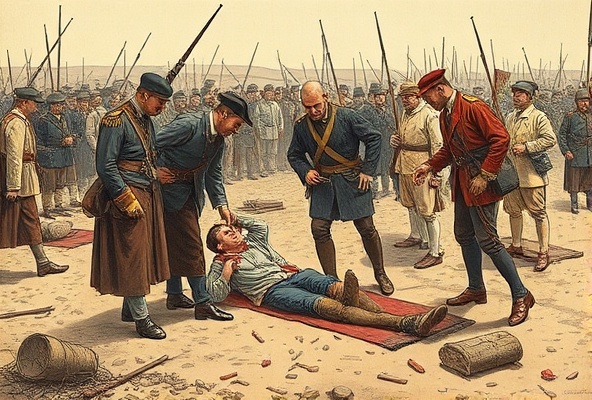
The birth of the Red Cross movement represents a pivotal moment in human history when one man's compassion transformed into an enduring global institution. Henry Dunant, a Swiss businessman traveling on business, arrived at the location of the Battle of Solferino by chance in June 1859. What he witnessed would fundamentally change the course of humanitarian history. The battlefield presented a scene of indescribable horror: approximately 40,000 soldiers lay wounded and dying, with virtually no organized medical care or assistance. The wounded soldiers were abandoned on the field, suffering from untreated wounds, exposure, hunger, and thirst.
Rather than being paralyzed by the scale of suffering, Dunant took action. He mobilized local civilians, particularly women, to provide basic care to the wounded without regard to which army they served. He organized water distribution, basic wound dressing, and comfort to dying soldiers. This extraordinary act of universal compassion demonstrated a revolutionary principle: humanitarian assistance should transcend nationality and military allegiance. The experience profoundly affected Dunant, who returned to Geneva determined to prevent similar suffering in future conflicts.
Over the next four years, Dunant invested his considerable intellect, resources, and personal influence in transforming his vision into reality. He published "A Memory of Solferino" in 1862, a powerful narrative account of the battle and the suffering he witnessed, combined with concrete proposals for establishing a permanent humanitarian organization and formalizing rules of warfare. The book became a sensation across Europe, resonating with educated classes and political leaders. Dunant's vision aligned with emerging humanitarian and liberal ideals of the time, finding fertile ground in the consciousness of European society.
Foundation and Formalization (1863-1900): Building International Legal Frameworks
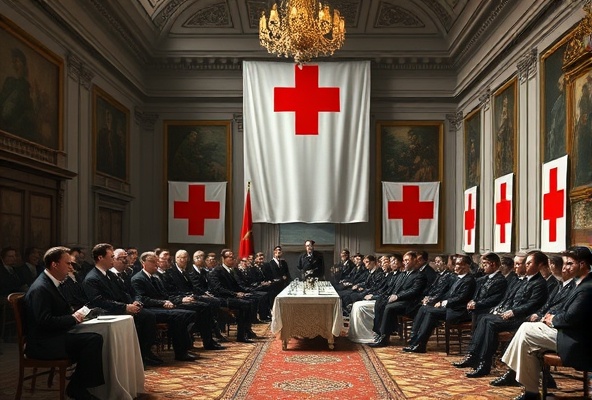
The actual establishment of the International Committee for Relief to the Wounded in Geneva in February 1863 represented the institutionalization of Dunant's vision. The organization was created by five Swiss citizens, including businessman Gustave Moynier, with Dunant serving as a member. Almost immediately, the committee achieved a remarkable diplomatic feat: convincing the nations of Europe to gather for a conference to discuss the treatment of wounded in warfare. This diplomatic accomplishment demonstrated the power of Dunant's moral vision to unite nations around humanitarian principles despite political rivalries and military competition.
The First Geneva Convention was signed in August 1864 by sixteen nations, establishing the first international treaty on humanitarian treatment in warfare. This convention was revolutionary in establishing legal protections for the wounded, requiring belligerent nations to respect medical personnel marked with the Red Cross emblem, and establishing the principle of impartial medical care in conflict. The convention represented a radical departure from traditional warfare practices and demonstrated that enlightened nations could agree on humanitarian principles that transcended military interests.
During the latter decades of the 19th century, the Red Cross rapidly expanded. National Red Cross societies were established in multiple countries, spreading the organization's humanitarian mission beyond Switzerland. The organization's work during the Franco-Prussian War (1870-1871) demonstrated its capacity to operate across hostile lines, providing medical care and tracing services for the separated and wounded. The successful implementation of Red Cross principles during this major European conflict enhanced its credibility and demonstrated the practical value of neutral, impartial humanitarian assistance.
During this period, the Red Cross also expanded beyond military medicine to address broader humanitarian concerns. Natural disaster relief became an increasingly important focus, with national societies providing assistance following earthquakes and floods. The organization began establishing blood donation programs and health education initiatives. By the end of the 19th century, the Red Cross had evolved from a single organization focused on battlefield medicine into an international movement with multiple national societies engaged in diverse humanitarian activities.
The Origin of the Red Cross Symbol: Meaning and Design
One of the most recognizable symbols in the world, the Red Cross emblem was chosen deliberately during the organization's founding in 1863 to represent universal humanitarian principles. The symbol consists of a red cross on a white background—notably a direct reversal of the Swiss flag, which features a white cross on a red background. This intentional design choice honored Switzerland's role as a neutral nation and its humanitarian tradition, while the simple geometric form of the cross could be easily recognized across diverse cultures and languages, transcending national and linguistic boundaries.
The red cross symbol carries profound historical and symbolic significance rooted in Christian tradition. The cross has represented Christianity for nearly two millennia, making it a symbol with deep cultural resonance in Western and many other societies. In selecting the red cross as its emblem, the organization drew upon this ancient symbolism while adapting it for humanitarian purposes. The color red was chosen for practical visibility and recognition—it stands out distinctly against neutral backgrounds and could be seen from distances important for identifying protected medical personnel and facilities during conflicts. The simplicity of the design ensured that it could be quickly recognized even in chaos and confusion of battlefields, serving as an essential protection marker for medical personnel, ambulances, and hospitals.
The emblem's design represented a diplomatic compromise and symbol of unity. By inverting the Swiss flag, the founders acknowledged Switzerland's unique position as a neutral nation deeply committed to humanitarian principles. The white background symbolized peace, purity, and impartiality—core values of the humanitarian mission. The prominence of the red color conveyed urgency, compassion, and the seriousness of the humanitarian mission. This visual design communicated at a glance what words might fail to convey: this is an organization committed to relieving human suffering regardless of political allegiances or national interests.
International law eventually formalized the protection of the Red Cross symbol, establishing that the emblem serves as a protective marking in armed conflict. Medical personnel, ambulances, hospitals, and other medical facilities displaying the emblem receive legal protection under the Geneva Conventions, allowing them to operate across enemy lines while maintaining their humanitarian mission. This legal recognition transformed the symbol from a mere organizational mark into a crucial element of international humanitarian law, granting it legal status that commanded respect from all combatants under the Geneva Conventions.
In 1876, recognizing the need for cultural inclusivity in Muslim-majority nations where the cross held different meanings, the International Red Cross adopted the Red Crescent as an alternative emblem with identical meaning and protection under international law. Later, a red diamond (Red Crystal) was added as a third emblem option, creating a truly inclusive international humanitarian symbol system. Despite these additions, the original Red Cross remains the most widely recognized humanitarian symbol globally, instantly conveying commitment to universal humanitarian principles transcending national, cultural, and religious boundaries.
The World Wars Period (1900-1945): Testing and Transformation at Unprecedented Scale
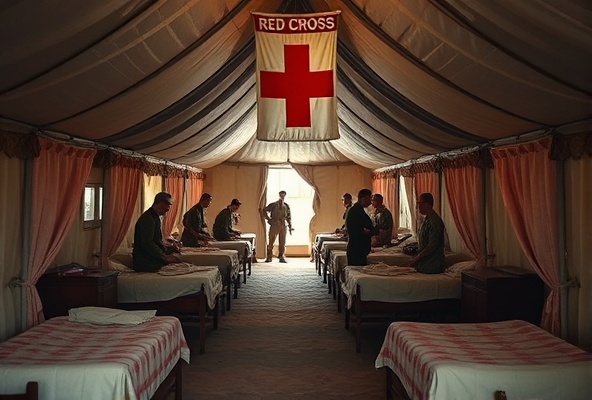
The twentieth century's world wars tested the Red Cross's humanitarian principles in ways that Dunant could never have imagined. World War I presented unprecedented challenges to the organization's operations. The industrial scale of warfare, with millions of soldiers engaged in static trench warfare, created casualty figures far exceeding anything from the 19th century. The Red Cross mobilized massive resources to operate hospital trains, establish field hospitals, and provide medical care to wounded soldiers. Additionally, the organization pioneered work in restoring family links—locating missing soldiers and maintaining communication between separated families across enemy lines.
The interwar period (1918-1939) saw the Red Cross attempting to consolidate its experiences and expand its mandate. The League of Red Cross Societies (later renamed the International Federation of Red Cross and Red Crescent Societies) was established in 1919 to coordinate national societies and facilitate international cooperation. During this period, the Red Cross increasingly engaged in peacetime activities, including public health education, epidemic response, and social welfare programs. The organization began adapting to serve broader humanitarian purposes beyond purely military concerns.
World War II pushed the Red Cross to its limits and raised fundamental questions about its humanitarian principles in the face of unprecedented evil. Operating under Nazi occupation and throughout war zones, the ICRC maintained its commitment to impartiality and humanitarian assistance. The organization provided food parcels to prisoners of war, visited detention camps, and attempted to locate missing persons. However, this period also revealed the limitations of neutral humanitarian organizations when confronted with systematic genocide and crimes against humanity. After the war, the Red Cross underwent significant reflection on its role during the Holocaust and adapted its commitment to humanitarian principles and transparency.
By 1945, the Red Cross had expanded exponentially, with national societies operating in scores of countries and tens of thousands of personnel engaged in humanitarian work. The organization had become truly global in scope, though it faced the profound challenge of adapting to the postwar world of competing superpowers and ideological conflict.
Cold War Era and Adaptation (1945-1990): Maintaining Principles Through Ideological Division
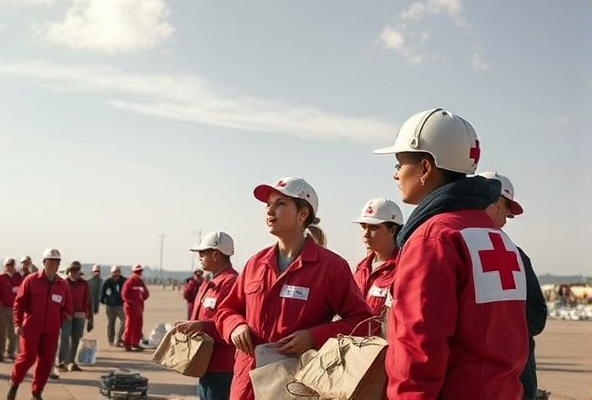
The Cold War presented unique challenges to the Red Cross's commitment to neutrality. Operating across the ideologically divided world required the organization to maintain strict impartiality despite intense pressures from both superpowers. The ICRC worked in numerous conflicts during this period, including the Korean War, the Vietnam War, conflicts in the Middle East, and various liberation struggles in Africa and Latin America. The organization's ability to maintain access to victims in conflicts by refusing to take political sides became increasingly valuable and increasingly difficult.
During this period, the Red Cross significantly expanded its peacetime humanitarian work. National societies became the primary humanitarian institutions in their countries, providing disaster relief, operating blood banks, training community health workers, and implementing public health programs. The organization adapted to serve contemporary humanitarian needs, expanding beyond traditional warfare and disaster relief to address issues of public health, social welfare, and development. This broadening mandate reflected both the changing nature of humanitarian emergencies and the growing capabilities of national societies.
The creation of the Red Crescent symbol (the Muslim equivalent of the Red Cross) in 1876 and its formal recognition in international law demonstrated the organization's commitment to cultural inclusivity. This allowed Muslim-majority nations to establish national humanitarian societies under a culturally appropriate symbol while maintaining adherence to Red Cross principles. By the end of the Cold War, the Red Cross and Red Crescent Movement had become a truly global, multicultural humanitarian institution.
Contemporary Era (1990-Present): Global Challenges and Humanitarian Innovation
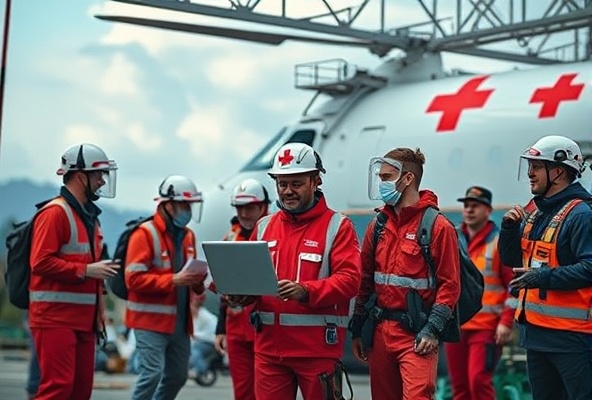
The post-Cold War period brought new types of humanitarian emergencies that the Red Cross had to address. The collapse of Yugoslavia created massive displacement and conflict requiring coordinated humanitarian response. The 1994 Rwanda genocide demonstrated the limitations of humanitarian organizations to prevent mass atrocities but also highlighted their critical role in documenting violations and protecting survivors. The Red Cross increasingly engaged in conflicts within nations rather than exclusively between nations, adapting its legal frameworks and operational approaches to address internal conflicts and disasters.
The 21st century has brought new humanitarian challenges that the Red Cross continues to adapt to address. The 2004 Indian Ocean tsunami demonstrated the organization's capacity to coordinate massive relief operations across borders and cultures. The subsequent emergencies—including the Haiti earthquake, ongoing conflicts in Syria, Yemen, South Sudan, and Afghanistan, the COVID-19 pandemic, and climate-related disasters—have required the Red Cross to continuously innovate in service delivery while maintaining its core humanitarian principles.
Today's Red Cross operates with sophisticated technology, trained professionals, and networks of millions of volunteers worldwide. The organization continues Dunant's legacy while adapting to contemporary challenges. The humanitarian principles established in 1863—humanity, impartiality, neutrality, independence, voluntary service, unity, and universality—remain as relevant as ever, guiding the organization's response to modern humanitarian crises. From its origins in one man's compassion on a single battlefield, the Red Cross has evolved into the world's largest humanitarian network, saving millions of lives annually and embodying humanity's commitment to reducing suffering in a complex and often troubled world.
A Catalyst for Change
Henry Dunant witnesses the devastating aftermath of the Battle of Solferino in Italy, where nearly 40,000 soldiers lay wounded with minimal medical care. Moved by their suffering, he organizes civilians to provide aid to all wounded regardless of nationality, demonstrating the possibility of universal humanitarian action in warfare.
International Committee Established
The International Committee for Relief to the Wounded is officially established in Geneva. The organization adopts the red cross emblem on a white background as its symbol, creating a neutral, universally recognizable mark of humanitarian protection. The first Geneva Convention is convened to establish rules governing treatment of the wounded.
Legal Framework for Humanitarianism
Sixteen nations sign the First Geneva Convention, establishing the first international treaty regarding the treatment and protection of wounded soldiers. This convention forms the foundation of international humanitarian law and requires all signatory nations to recognize and respect the Red Cross emblem as a neutral symbol of protection.
Testing and Expansion
The Red Cross faces unprecedented challenges during World War I and World War II, expanding its operations to unprecedented scales. The organization provides medical care, searches for missing persons, delivers supplies to prisoners of war, and conducts relief operations across multiple continents. National Red Cross societies form in countries worldwide.
Global Humanitarian Network
Despite geopolitical tensions, the Red Cross maintains its neutral stance and continues operations across divided nations and in regions of conflict. The organization expands beyond wartime activities to include disaster relief, health services, and community development programs in peacetime, becoming a global humanitarian institution.
Global Humanitarian Leadership
Today, the Red Cross operates in nearly every country, responding to conflicts, natural disasters, epidemics, and humanitarian emergencies. The organization has evolved to address contemporary challenges including climate change impacts, migration crises, and pandemic response, while maintaining its core commitment to impartial humanitarian assistance.
Learn More About the Red Cross
Core Principles and Mission
Seven Fundamental Principles
The International Red Cross and Red Crescent Movement is guided by seven fundamental principles that define its character and ensure its effectiveness in serving humanity. These principles were formally adopted at an International Conference in 1965 and serve as the ethical foundation for all Red Cross and Red Crescent activities worldwide, ensuring consistency in how the organization approaches humanitarian challenges across cultures, political systems, and regions.
Humanity: The fundamental belief that all human beings deserve dignity and protection. The movement responds to suffering wherever it occurs, helping people affected by conflict and disaster without discrimination based on nationality, ethnicity, religious belief, or political opinion. This principle embodies the belief that every human life has equal value.
Impartiality: The Red Cross provides assistance solely based on need, without discrimination among or within victim groups. This principle ensures that aid reaches those most vulnerable or suffering the greatest hardship, regardless of their political affiliation, nationality, or other considerations. Impartiality is essential to the organization's credibility and moral authority.
Neutrality: The organization maintains strict political neutrality, neither taking sides in conflicts nor engaging in political controversies. This neutrality is essential for the Red Cross to maintain access to victims on all sides of conflicts and to be trusted by warring parties. This principle has allowed the Red Cross to operate in some of history's most polarized and dangerous conflicts.
Independence: The Red Cross maintains autonomy in decision-making while maintaining cooperative relationships with governments and other organizations. This independence ensures that humanitarian principles, not political interests, guide the organization's activities. The movement is accountable to its members and the global community for upholding its humanitarian mission.
Voluntary Service: The movement is built on the willingness of millions of volunteers who contribute their time, skills, and resources. This principle recognizes that humanitarian work is fundamentally a labor of love and solidarity. Volunteer involvement ensures deep community connections and demonstrates that humanitarian concern transcends professional obligations.
Unity: There is only one Red Cross or Red Crescent Society in each country, ensuring a coordinated, unified approach to humanitarian work within national borders. At the international level, the movement maintains unity through the International Federation of Red Cross and Red Crescent Societies and the International Committee. This unity enables coordinated global responses to humanitarian emergencies.
Universality: The humanitarian mission is universal, applying to all individuals and all nations. The Red Cross seeks to unite all humanity around humanitarian values and works to promote universal respect for human dignity. This principle reflects the belief that humanitarian concern transcends geographic, cultural, and political boundaries.
Structure and Organization
The International Red Cross and Red Crescent Movement consists of three distinct organizational components, each with specific roles and responsibilities. This structure ensures both specialization and coordinated action across the global movement. The three components work together to fulfill the humanitarian mission while maintaining their respective autonomies and areas of expertise.
International Committee of the Red Cross (ICRC): Established in 1863, the ICRC serves as the original and primary institution charged with protecting victims of armed conflict and violence. Operating from its headquarters in Geneva, Switzerland, the ICRC maintains the strictest standards of neutrality and impartiality. It works exclusively in situations of conflict and violence, providing medical care, ensuring compliance with international humanitarian law, and protecting the wounded, detained, and displaced.
International Federation of Red Cross and Red Crescent Societies (IFRC): Founded in 1919, the IFRC serves as the federation and support structure for all national Red Cross and Red Crescent societies. It provides coordination, technical support, training, and resources to member societies. The IFRC focuses on both emergency response and development work, addressing humanitarian challenges across natural disasters, health crises, and community development.
National Red Cross and Red Crescent Societies: More than 190 national societies operate worldwide, each serving as the primary humanitarian institution within their country. These societies work under their national laws while adhering to Red Cross principles. They provide disaster relief, health services, community development, and emergency response. National societies employ thousands of professionals and engage millions of volunteers in humanitarian activities.
Modern Operations and Global Impact
Today, the Red Cross operates across multiple humanitarian domains, responding to the complex challenges of the 21st century while maintaining its historical focus on conflict and disaster response. The organization has demonstrated remarkable adaptability, expanding its mission to address contemporary humanitarian emergencies including pandemics, climate-related disasters, migration crises, and violence in urban communities.
Armed Conflict Response: The ICRC maintains a presence in major conflict zones worldwide, providing emergency medical care, visiting detained persons, restoring family links for separated relatives, and advocating for respect for international humanitarian law. In recent years, the ICRC has worked in Syria, Yemen, South Sudan, Ukraine, Myanmar, and numerous other conflict zones, often operating under extremely dangerous conditions.
Disaster Response: National societies respond to earthquakes, floods, hurricanes, tsunamis, and other natural disasters, providing emergency shelter, clean water, food, and medical care. The Red Cross has established sophisticated systems for rapid deployment of personnel and resources to affected areas. Recent major responses have included relief operations following the 2004 Indian Ocean tsunami, 2010 Haiti earthquake, and COVID-19 pandemic.
Health Services and Community Programs: Red Cross societies operate blood banks, provide health education, train community health workers, and deliver essential health services in underserved communities. These programs address maternal health, disease prevention, water and sanitation, and health emergency preparedness, complementing government health systems and reaching vulnerable populations.
Migration and Restoring Family Links: The Red Cross assists migrants and displaced persons, providing protection, humanitarian assistance, and tracing services for family members separated by conflict or disaster. This work includes supporting vulnerable migrants, advocating for humane treatment, and restoring communication between separated families across borders.
Legacy and Historical Significance
The Red Cross represents one of humanity's most significant institutional responses to suffering, embodying the principle that compassion and humanitarian assistance transcend nationalism and political divisions. Henry Dunant's vision of universal humanitarian concern, born from witnessing suffering on a single battlefield, has evolved into a global network operating in nearly every country and touching millions of lives annually.
The Red Cross was instrumental in developing international humanitarian law, a body of legal standards now respected and applied worldwide. The Geneva Conventions, which formalized rules protecting victims of armed conflict, represent the Red Cross's most significant institutional contribution to limiting human suffering in war. These conventions have been expanded and refined over decades and remain the foundation of protections for civilians, prisoners of war, and wounded combatants.
Today, the Red Cross stands as a testament to what organized humanitarian effort can accomplish. From its origins in a single Swiss businessman's commitment to helping suffering soldiers, the organization has grown into a global institution that saves lives, protects dignity, and promotes peace. The red cross emblem, instantly recognizable across cultures and languages, symbolizes hope for millions facing hardship, conflict, and disaster. As the world faces new humanitarian challenges, the Red Cross continues to adapt while remaining faithful to the timeless principles established in 1863: to reduce human suffering through impartial, neutral, and independent humanitarian action.
Frequently Asked Questions
Have questions about the International Red Cross? Here are answers to some of the most common inquiries.
Comments & Discussion
Have thoughts or questions about this topic? Share your feedback below. All comments are moderated to maintain a respectful community.