Grand Lodge of Connecticut
The Grand Lodge of Connecticut represents one of the early American Masonic organizations, deeply rooted in the nation's founding traditions.
Founded: 1789
Location: Hartford, Connecticut
Key Contribution: Early American Masonry and Constitutional Tradition
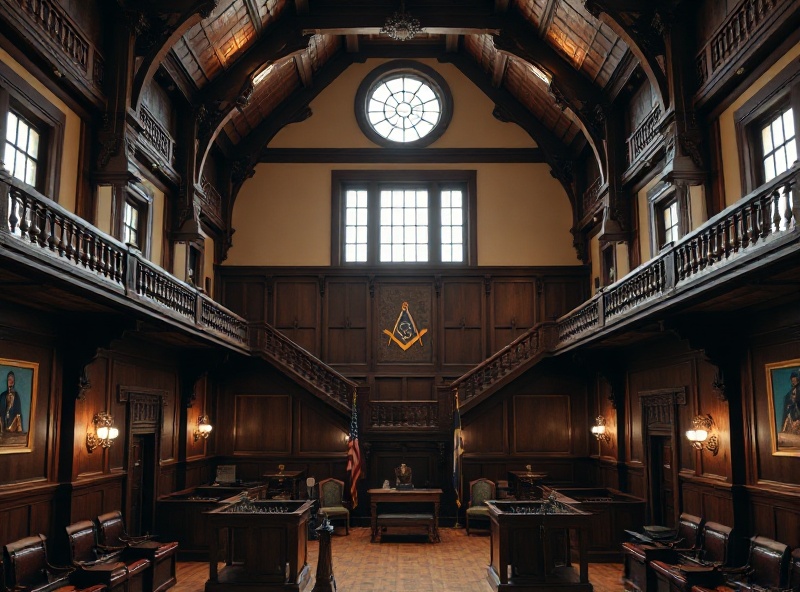
Deep History: A Journey Through Time
Explore the comprehensive history of the Grand Lodge of Connecticut across four pivotal eras
Founding and Early Vision
Connecticut Masonry has roots extending back to the early 18th century, with the Grand Lodge formally chartered in 1789 during the founding era of the American nation. Connecticut's early Masonic lodges attracted educated merchants, professionals, clergy, and civic leaders who sought to advance enlightenment principles and establish moral frameworks in colonial society. These lodges served as intellectual centers where the finest minds of Connecticut gathered to discuss philosophy, science, and civic governance. Connecticut Masons became instrumental in the American Revolution, with many lodge members contributing to the revolutionary cause and the founding documents of the nation.
Growth and Expansion
Following the American Revolution, Connecticut Masonry flourished during the early decades of the United States. The state's industrialization and economic development in the 19th century created opportunities for Masonic growth and influence. New lodges were established throughout Connecticut, from coastal communities to inland manufacturing centers. Connecticut Masons supported education through the establishment of schools and libraries, and participated actively in civic institutions. Appendant bodies including the Scottish Rite and York Rite established themselves throughout the state, enhancing Masonic education and fellowship.
Mid-Century Development
The 20th century brought significant social and economic change to Connecticut, including industrialization, immigration, and urban development. Connecticut Masonry adapted to these changes while maintaining high standards of Masonic practice and integrity. Masonic lodges remained central to community life, supporting education, healthcare, youth development, and disaster relief. Connecticut Masons participated in civic leadership and supported public initiatives that advanced education, healthcare, and economic opportunity for Connecticut citizens.
Modern Era and Legacy
Today, the Grand Lodge of Connecticut represents nearly 300 years of continuous Masonic tradition and service to the state. With active lodges throughout Connecticut, the Grand Lodge continues to maintain the highest standards of Masonic practice while serving contemporary communities. Modern Connecticut Masons support education through scholarships, provide healthcare support, engage in youth development programs, and contribute to community service. The Grand Lodge preserves Connecticut's rich Masonic heritage while remaining a vital force for positive change in contemporary society.
Historical Overview
Key milestones in the history of the Grand Lodge of Connecticut
founding
The Grand Lodge of Connecticut was chartered in 1789, emerging from a colonial tradition of Masonic activity.
colonial
Connecticut lodges date to the early 18th century and played important roles in colonial intellectual and civic life.
revolutionary
Connecticut Masons contributed to the American Revolution and Constitutional Convention.
modern
The Grand Lodge continues to maintain high standards of Masonic practice and community engagement.
Masonic Rituals and Degrees
Understand the sacred rituals, degrees, and ceremonial traditions of the Grand Lodge of Connecticut
three Degrees
Connecticut confers the three basic degrees following traditional American Masonic practices.
apprentice
Introduction to Masonic light and principles of self-improvement.
fellowcraft
Development of Masonic science and craftsman development.
master Mason
Completion of basic education and representation of the perfected Mason.
appendant
Scottish Rite, York Rite, and other bodies provide further learning opportunities.
The Three Basic Degrees
Entered Apprentice
The first degree introduces the candidate to Masonic light, principles, and the foundations of the fraternity's teachings.
Fellowcraft
The second degree develops the candidate's understanding of Masonic science, geometry, and intellectual foundations.
Master Mason
The third degree represents completion of basic Masonic education and preparation for service to the fraternity.
Notable Members
Prominent leaders and figures who have been members of the Grand Lodge of Connecticut
Roger Sherman - Signer of Declaration of Independence
Charitable Work and Community Service
Connecticut Masons support education, healthcare, youth programs, and community service.