Grand Lodge of Delaware
The Grand Lodge of Delaware emerged from colonial roots and represents Masonry's role in the founding of the American nation.
Founded: 1787
Location: Wilmington, Delaware
Key Contribution: First State Masonry
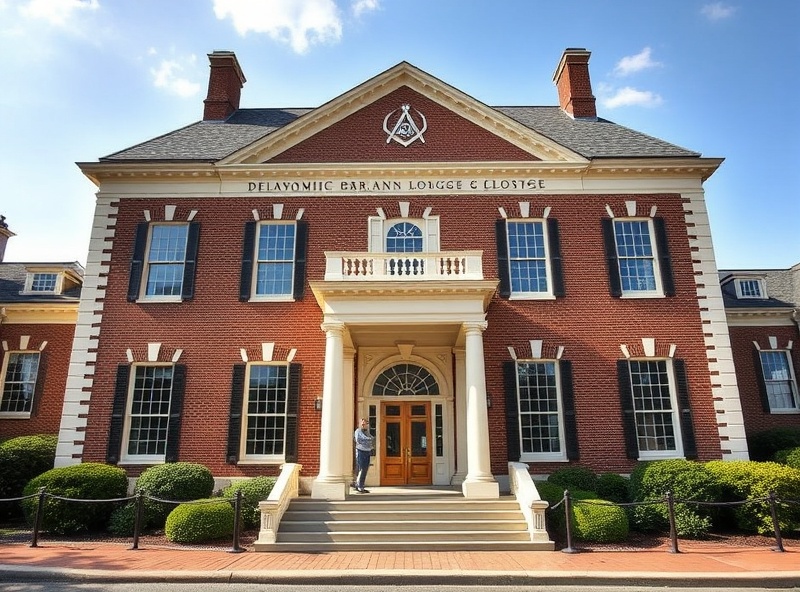
Deep History: A Journey Through Time
Explore the comprehensive history of the Grand Lodge of Delaware across four pivotal eras
Founding and Early Vision
Delaware Masonry has colonial roots extending to the 18th century, with the Grand Lodge formally chartered in 1787—coinciding with Delaware's role as the first state to ratify the U.S. Constitution. As the 'First State,' Delaware's early Masons were prominent civic leaders, merchants, and professionals who played crucial roles in the founding era of American democracy. Masonic lodges in Wilmington and other Delaware communities served as gathering places for the state's most influential men, providing frameworks for ethical governance and community development. Delaware Masons contributed significantly to the intellectual and civic development of the young nation.
Growth and Expansion
Throughout the 19th century, Delaware Masonry grew steadily as the state developed economically and socially. New lodges were chartered throughout Delaware, from urban centers to rural communities. Delaware Masons became involved in establishing schools, supporting charitable institutions, and participating in civic improvements. The state's development as an industrial and commercial center created opportunities for Masonic influence and growth. Appendant bodies expanded Masonic education and fellowship opportunities throughout Delaware.
Mid-Century Development
The 20th century brought significant economic growth to Delaware, particularly through chemical manufacturing and corporate development. Delaware Masonry adapted to these changes while maintaining its historical commitment to community service and education. Masonic lodges continued to support education, healthcare, youth development, and community initiatives. Delaware Masons participated in civic leadership and supported public institutions that advanced education and economic opportunity.
Modern Era and Legacy
Today, the Grand Lodge of Delaware represents over 230 years of continuous Masonic service to America's First State. Despite Delaware's small size, the Grand Lodge maintains active lodges and continues its tradition of serving communities with integrity and brotherhood. Modern Delaware Masons support education, healthcare initiatives, youth programs, and community service. The Grand Lodge preserves Delaware's distinguished Masonic heritage while remaining committed to contemporary service and fellowship.
Historical Overview
Key milestones in the history of the Grand Lodge of Delaware
founding
The Grand Lodge of Delaware was chartered in 1787, during the period of the Constitutional Convention.
colonial
Delaware Masonry has roots extending to the colonial period.
constitutional
Delaware Masons participated in the founding documents and institutions of the nation.
modern
Today, the Grand Lodge of Delaware continues Masonic traditions of service and community.
Masonic Rituals and Degrees
Understand the sacred rituals, degrees, and ceremonial traditions of the Grand Lodge of Delaware
three Degrees
Delaware follows the three basic Masonic degrees.
apprentice
Introductory degree.
fellowcraft
Developmental degree.
master Mason
Completion degree.
appendant
Access to appendant bodies.
The Three Basic Degrees
Entered Apprentice
The first degree introduces the candidate to Masonic light, principles, and the foundations of the fraternity's teachings.
Fellowcraft
The second degree develops the candidate's understanding of Masonic science, geometry, and intellectual foundations.
Master Mason
The third degree represents completion of basic Masonic education and preparation for service to the fraternity.
Charitable Work and Community Service
Delaware Masons support education, healthcare, and community development.