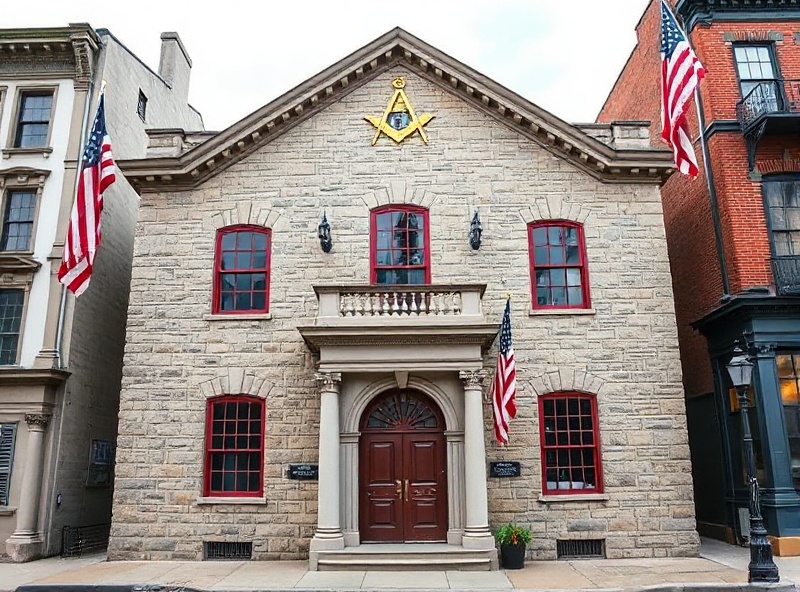
Grand Lodge of Pennsylvania
The birthplace of American Freemasonry, Pennsylvania holds a unique place in the fraternity's history. From Benjamin Franklin's influence to its role in the American Revolution, Pennsylvania Freemasonry shaped the nation's founding principles.
Founded: 1734
Location: Philadelphia, Pennsylvania
Key Contribution: First Grand Lodge in America
Deep History: A Journey Through Time
Explore the comprehensive history of the Grand Lodge of Pennsylvania across four pivotal eras
Founding and Early Vision
The Grand Lodge of Pennsylvania was established in 1734, making it the first Grand Lodge in North America. Benjamin Franklin and other Philadelphia leaders championed Masonry as a vehicle for enlightenment and civic progress. Early Pennsylvania Masonry attracted merchants, intellectuals, and civic leaders committed to American principles. Philadelphia became a major center of American Masonic development, establishing traditions that would influence the entire nation.
Growth and Expansion
Throughout the 18th and 19th centuries, Pennsylvania Masonry remained preeminent in American Freemasonry. Philadelphia's prominence and Pennsylvania's early statehood meant that Pennsylvania Masonry influenced American development. New lodges were chartered throughout Pennsylvania, and Scottish Rite and York Rite bodies provided advanced degrees. Pennsylvania Masons were instrumental in founding hospitals, schools, and civic institutions that shaped American society.
Mid-Century Development
The 20th century saw Pennsylvania Masonry maintain its leadership position in American Freemasonry. Pennsylvania Masons supported education, healthcare, and community service. The state's industrial prominence meant that Pennsylvania Masonry served diverse populations. The Grand Lodge developed comprehensive charitable and educational programs reflecting commitment to American ideals.
Modern Era and Legacy
Today, the Grand Lodge of Pennsylvania represents nearly 300 years of American Masonic tradition. With hundreds of active lodges, Pennsylvania Masonry continues its mission of brotherhood and service. Modern Pennsylvania Masons support medical research, youth education, disaster relief, and community development. Pennsylvania Masonry remains a beacon of American Masonic tradition and continues its foundational role in American society.
Historical Overview
Key milestones in the history of the Grand Lodge of Pennsylvania
founding
The Grand Lodge of Pennsylvania was established in 1734, making it the first grand lodge in North America.
expansion
Throughout the 18th century, Pennsylvania Lodges grew in prominence and influence.
revolutionary
Pennsylvania Freemasons played a crucial role during the American Revolution.
modern
Today, the Grand Lodge of Pennsylvania remains one of the largest and most influential Masonic organizations.
Masonic Rituals and Degrees
Understand the sacred rituals, degrees, and ceremonial traditions of the Grand Lodge of Pennsylvania
three Degrees
Like all mainstream Freemasonry, Pennsylvania Masons confer the three basic degrees.
apprentice
The Entered Apprentice degree introduces the candidate to Masonic principles.
fellowcraft
The Fellowcraft degree develops understanding of Masonic science and geometry.
master Mason
The Master Mason degree completes basic Masonic education.
appendant
Pennsylvania Masons can advance through Scottish Rite, York Rite, and numerous other bodies.
The Three Basic Degrees
Entered Apprentice
The first degree introduces the candidate to Masonic light, principles, and the foundations of the fraternity's teachings.
Fellowcraft
The second degree develops the candidate's understanding of Masonic science, geometry, and intellectual foundations.
Master Mason
The third degree represents completion of basic Masonic education and preparation for service to the fraternity.
Notable Members
Prominent leaders and figures who have been members of the Grand Lodge of Pennsylvania
Benjamin Franklin - Printer, scientist, diplomat
George Washington - First President
Charitable Work and Community Service
Pennsylvania Masons support Shriners Hospital, youth education, disaster relief, and community development.