The Worshipful Master
The supreme leader of the lodge: the Worshipful Master presides over all activities, preserves Masonic traditions, and guides the lodge with wisdom, authority, and service.
The Worshipful Master is the principal officer, chief executive, and spiritual leader of the Masonic lodge. Elected annually by the membership, this position represents the culmination of years of preparation, demonstrated merit, and proven dedication to the fraternity. The Worshipful Master bears ultimate responsibility for all aspects of lodge operations—ceremonial, administrative, financial, and spiritual. Those who serve in this position are held to the highest standards of character and conduct, and their leadership directly determines the quality and effectiveness of the lodge's work.
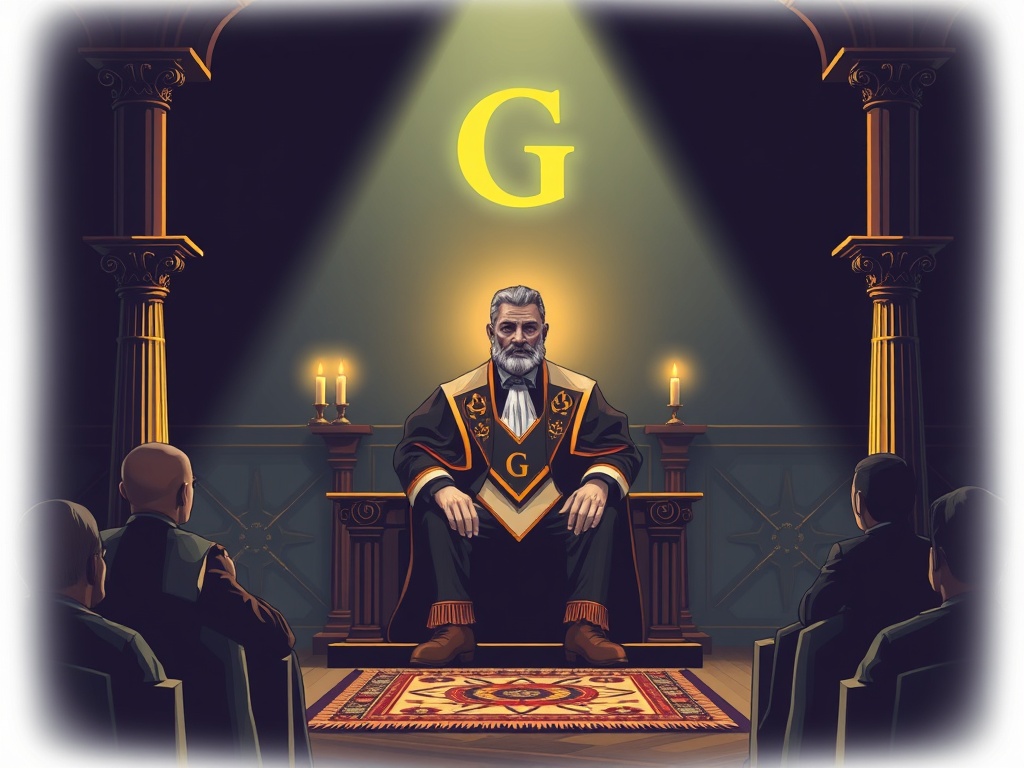
The Highest Office in the Lodge
The Worshipful Master stands as the supreme officer of the lodge, exercising complete authority over all lodge affairs and bearing responsibility for its spiritual and material well-being.
The Meaning of "Worshipful"
The term "Worshipful" requires clarification, for it does not refer to religious worship. Rather, it signifies "worthy of respect and honor"—a designation used historically for persons of high rank and dignity. The Worshipful Master is called "Worshipful" because the office itself is worthy of reverence and because the individual holding the office is recognized as worthy of the extraordinary trust placed in him by the membership.
In some jurisdictions, the Worshipful Master may also be addressed as "Worthy Master" or simply "Master," but the traditional title emphasizes that the office transcends the individual holding it. It is the office that is worshipful, and the Mason holding that office must live up to the dignity and responsibility it represents.
Supreme Authority and Responsibility
The Worshipful Master possesses supreme authority over the lodge. All officers report to him, all ceremonies are conducted under his direction, and all decisions of consequence pass through his judgment. This authority is not absolute or arbitrary but rather is exercised in accordance with Masonic law, the ancient landmarks of the order, and the bylaws of the individual lodge and jurisdiction.
With this authority comes commensurate responsibility. The Master is accountable to the membership for his stewardship of the lodge, to the Grand Lodge for his adherence to Masonic law and standards, and to the greater Masonic fraternity for the reputation and standing of his lodge. This responsibility is not a burden to be borne reluctantly but rather a sacred trust that the Master accepts with solemnity and dedication.
Characteristics of Exemplary Worshipful Masters
Exceptional Worshipful Masters share certain qualities that enable them to discharge their responsibilities effectively. These include deep knowledge of Masonic teachings and practice, the ability to inspire and lead others, sound judgment in making difficult decisions, unwavering commitment to Masonic principles, and a genuine devotion to the welfare of the brotherhood. Great Masters are both visionary—seeing possibilities for the lodge's future—and practical, managing day-to-day affairs with competence and care.
Knowledge
Master of all three degrees, rituals, and Masonic law
Character
Exemplary conduct and unwavering integrity
Vision
Clear sense of direction for the lodge's future
Service
Genuine commitment to the welfare of the membership
Core Responsibilities and Duties
The Worshipful Master's responsibilities span every dimension of lodge life, from ceremony and education to administration and governance.
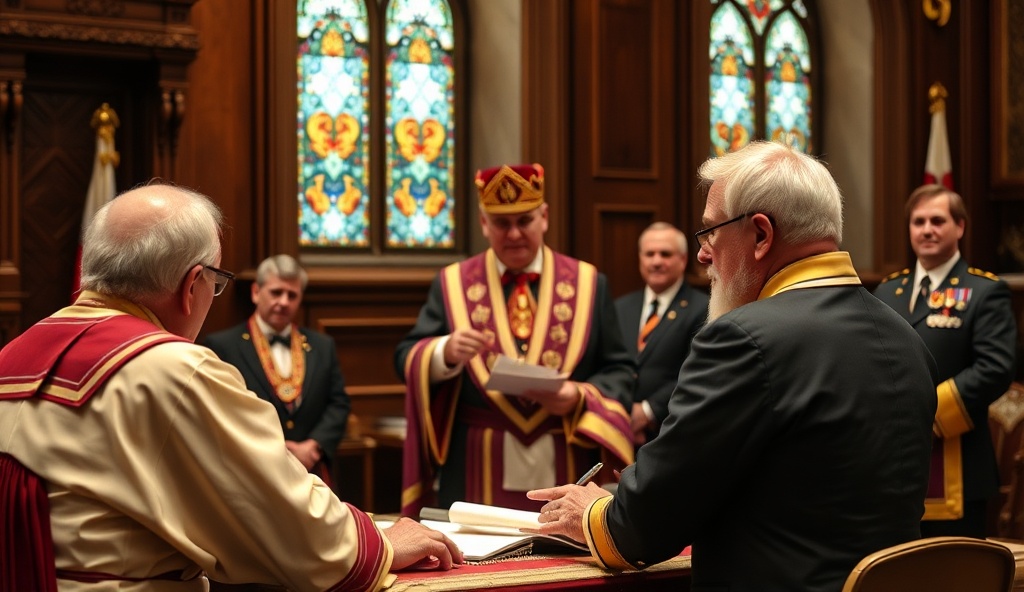
Presiding Over All Lodge Meetings and Ceremonies
The Worshipful Master presides over every meeting of the lodge, from regular stated meetings to special communications. He opens and closes the lodge in the three degrees, conducts all business, and presides over the conferral of the three degrees of Masonry. The Master's competence in managing these meetings and ceremonies sets the standard for lodge work and directly influences the quality of the Masonic experience. The Master's dignity, knowledge, and reverent approach to the ritual teach the membership about the sacred nature of Masonic work.
Conferring the Three Degrees
While the Senior and Junior Wardens preside over the second and first degrees respectively, the Worshipful Master has ultimate responsibility for all three degrees. He directly confers the Master Mason degree and oversees the conferral of the other two degrees. The Master's mastery of the ritual and his ability to infuse the ceremonies with spiritual and philosophical depth determine whether candidates truly understand and appreciate the teachings they receive. A Master who takes this responsibility seriously studies constantly to ensure he presents the degrees in their fullest richness.
Maintaining Masonic Standards and Traditions
The Worshipful Master is the guardian of Masonic standards within his lodge. He ensures that all work is conducted according to the landmarks and ancient usages of the order, that deviations from proper procedure are corrected, and that the lodge maintains the highest standards of conduct and practice. This responsibility includes disciplining members when necessary and ensuring that those elected to office are properly qualified. The Master's vigilance in maintaining standards preserves the integrity and reputation of Masonry itself.
Overseeing Lodge Administration
The Worshipful Master is responsible for all administrative affairs of the lodge. This includes oversight of finances, management of lodge property, supervision of the secretary and treasurer, and ensuring that all records are kept properly. The Master must ensure that the lodge meets its financial obligations, maintains its physical facilities, and complies with both Masonic law and civil law. This administrative responsibility requires business acumen and attention to detail.
Representing the Lodge
The Worshipful Master serves as the official representative of the lodge to the Grand Lodge, to other lodges, and to the broader community. He attends Grand Lodge communications, participates in inter-lodge events, and may represent the lodge in community organizations. The Master's bearing, knowledge, and conduct directly reflect on the reputation of the lodge. A Master who is well-informed, articulate, and exemplary in conduct brings honor to his lodge and advances Masonic standing and influence in the community.
Developing and Mentoring Officers and Members
The Worshipful Master is responsible for the development of officers and the cultivation of leadership throughout the lodge. By providing guidance to the Senior and Junior Wardens, mentoring other officers, and creating an environment where newer members can grow in Masonic knowledge and commitment, the Master ensures the future vitality of the lodge. A Master who invests in people creates a lodge with deep strength and sustained excellence across generations.
Serving as Spiritual Guide
Beyond administrative and ceremonial duties, the Worshipful Master serves as a spiritual guide to the membership. Through his example, his words, and his leadership of Masonic education, the Master helps brothers deepen their understanding of Masonic philosophy and principles. The Master creates an environment where spiritual growth is encouraged and where Masonic ideals are lived out in concrete ways. This spiritual leadership may be the Master's most important contribution to the lodge.
The Worshipful Master's Year
A Master's year is a time of intensive work, growth, challenge, and profound satisfaction rooted in service.
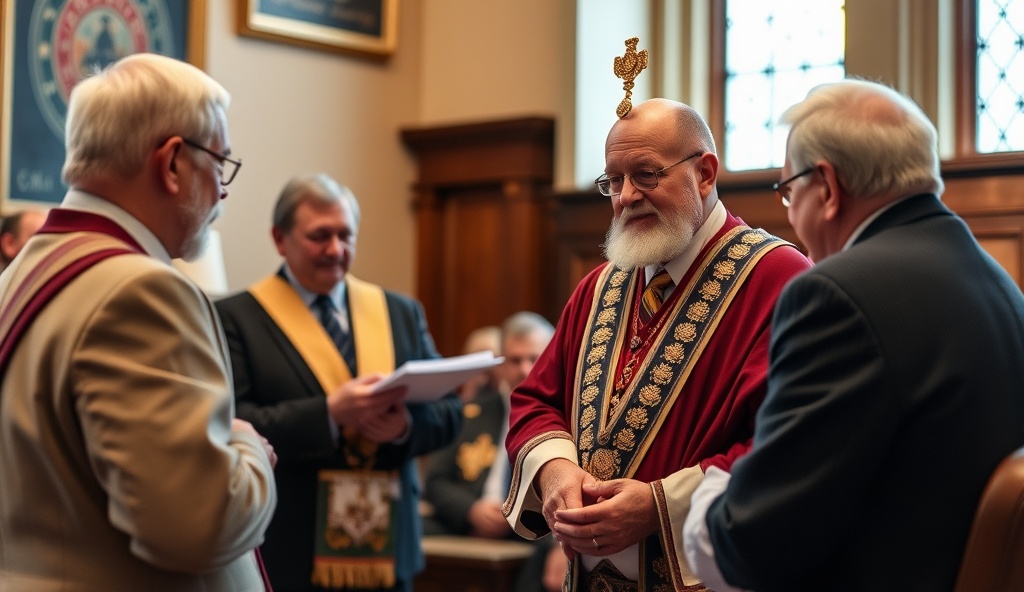
The Weight of Authority
Most Worshipful Masters report that their year in the chair is more demanding than they anticipated. The responsibility is both exhilarating and humbling. The Master must make decisions that affect the lives and experiences of his members, navigate conflicts between brothers, manage complex logistics, represent the lodge in challenging circumstances, and uphold the standards of the order in an increasingly secular world.
Yet this weight of authority also brings profound meaning. The Master recognizes that his faithful service is contributing to something far larger than himself—the continuation and strengthening of a fraternity that has touched millions of lives across centuries. This sense of participating in something sacred and timeless sustains Masters through difficult times.
The Rewards of Service
Experienced Masters testify to the profound rewards of faithful service. The opportunity to guide candidates through transformative degree work, to develop future leaders, to resolve conflicts, and to move the lodge forward toward its best potential creates deep satisfaction. Many Masters report that their year in the chair was the most meaningful period of their Masonic experience.
The relationships formed, the trust extended by the membership, the knowledge gained, and the sense of having made a real difference in people's lives—these rewards transcend any recognition or honor. A Master who completes his year with integrity and dedication earns the lasting respect and affection of his brothers.
Life After the Chair
After stepping down from the Master's chair, a Past Master retains the respect and influence he has earned through faithful service. Many lodges look to their Past Masters for counsel on important decisions, and many Past Masters remain deeply involved in lodge affairs. The transition from the active authority of the Master to the advisory role of Past Master is often a welcome one, allowing the past Master to focus on mentoring and broader Masonic involvement without the intensive demands of the office.
Many Past Masters go on to serve in higher Masonic bodies—Grand Lodge, Scottish Rite, York Rite, or other organizations—where they can contribute their experience and knowledge on a broader scale. Others focus on their local lodge, serving on committees and mentoring younger officers. The Master's year marks not an ending but a transition to a new phase of Masonic service and influence.
Qualifications and Selection
Election to the Worshipful Master position represents recognition of exceptional qualification and demonstrated fitness for leadership.
Essential Qualifications
Most jurisdictions require that a candidate for Worshipful Master be a Master Mason, have served as Senior Warden (in most jurisdictions) or have equivalent experience, and be in good standing with the lodge. Beyond these formal requirements, the ideal candidate possesses deep knowledge of Masonic teachings, demonstrated leadership ability, sound character, financial responsibility, and genuine devotion to Masonic principles.
Master Mason status
Fully initiated into all three degrees
Prior officer experience
Usually as Senior Warden or equivalent
Good standing
Full member, current dues, no disciplinary issues
Sustained commitment
Years of consistent participation in lodge work
The Election Process
The Worshipful Master is elected annually by the membership, usually at a stated meeting in the fall or winter. The election represents the collective judgment of the lodge about who is best qualified to lead. In some lodges, a nominating committee is appointed to suggest candidates; in others, candidates are nominated from the floor. The secret ballot ensures that votes are cast freely without pressure or influence.
Preparation and Installation
Following election, the newly elected Master typically prepares for his year through study, consultation with Past Masters and senior officers, and attendance at Grand Lodge schools. The installation ceremony, often conducted by the Grand Lodge or a senior officer, formally recognizes the new Master's authority and invokes the blessings of the Almighty on his service. The installation marks the beginning of a significant chapter in both the Master's life and the lodge's history.
Explore Other Lodge Officers
Learn about the other officers and roles within the Masonic lodge structure.
Senior Warden
The first officer who serves as deputy to the Master and presides over the second degree.
Learn More →Junior Warden
The second officer who presides over the first degree, guides new candidates, and begins the leadership progression.
Learn More →Senior Master of Ceremonies
The principal coordinator of all lodge ceremonial work.
Learn More →Junior Master of Ceremonies
The skilled conductor of lodge ceremonial procedures.
Learn More →Tyler
The guardian and protector of the lodge entrance and sacred work.
Learn More →Pursuivant
The ceremonial officer and usher who guides members through lodge ceremonies.
Learn More →